
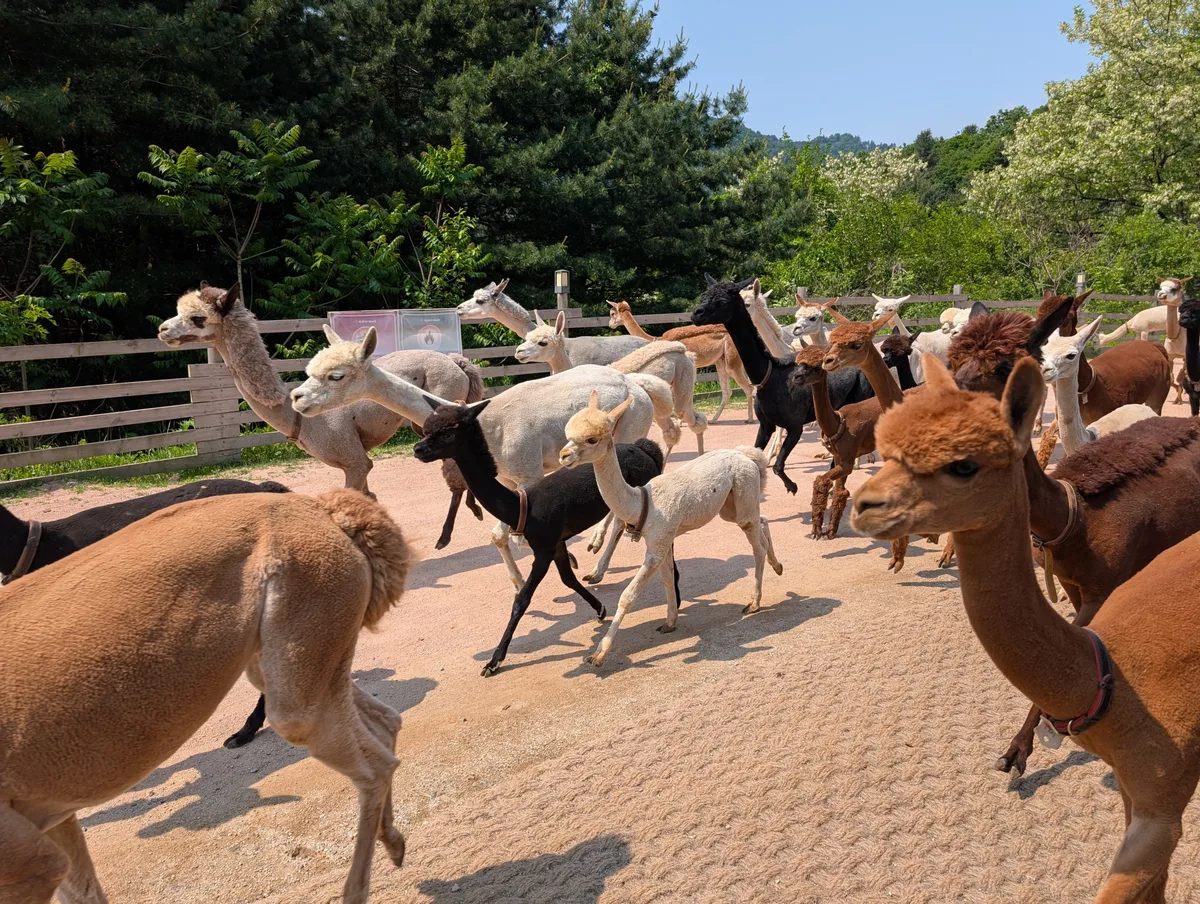
It was May 29, 2025, and the first thing Alpaca World asked of me was a climb. The parking lot is at the bottom of a steep hill and the ticket booth is at the top.
Two Hours to Alpaca World
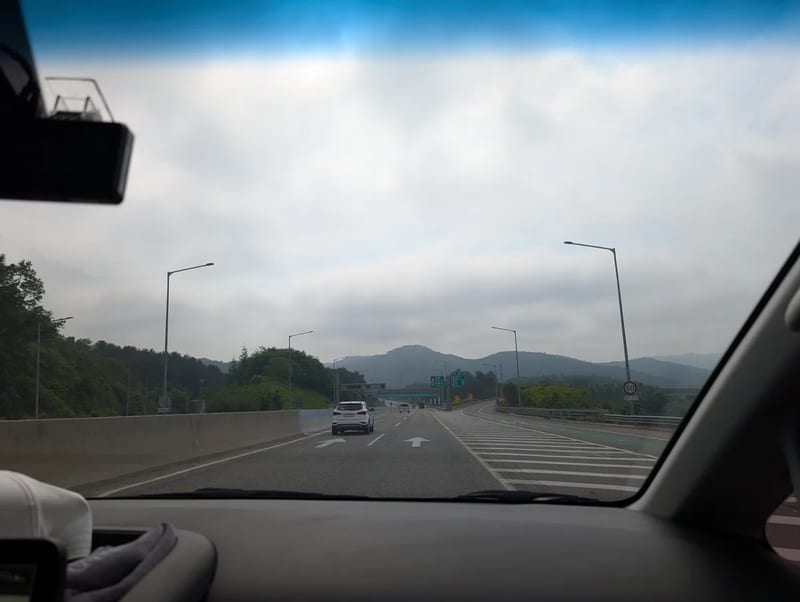
The drive from our hotel took almost two hours, about 120 kilometers. Alpaca World is in Hwacheon-myeon, Hongcheon County, in Gangwon Province, roughly east to northeast of Seoul as I understood it. Wikipedia lists it among the county’s attractions.
Alpacas are native to South America, so finding them in the Korean countryside raised a question. I looked up why they were brought here and found that they are kept for their coats, which are harvested for fiber to make clothes. I could not verify that part.
The fiber itself has a good reputation. Wikipedia describes it as warmer than sheep’s wool, not prickly, and containing almost no lanolin.
Admission, Then More Uphill
The ticket board listed admission at 18,000 won, about $13, for ages 36 months through 64 years, with children under 36 months free. The alpaca nature walk was listed separately at 15,000 won, and a feed coin for the animal food experience was 5,000 won. A show starts at 10:00, and after that you can wander.
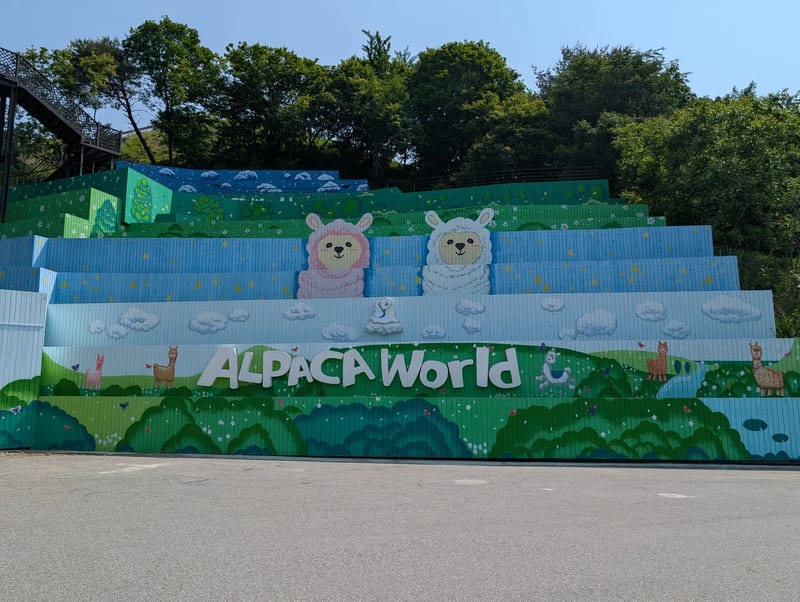
Past the entrance the paths kept going uphill. From a distance I could already see white, brown and black alpacas.
The Food Goes in Your Hand
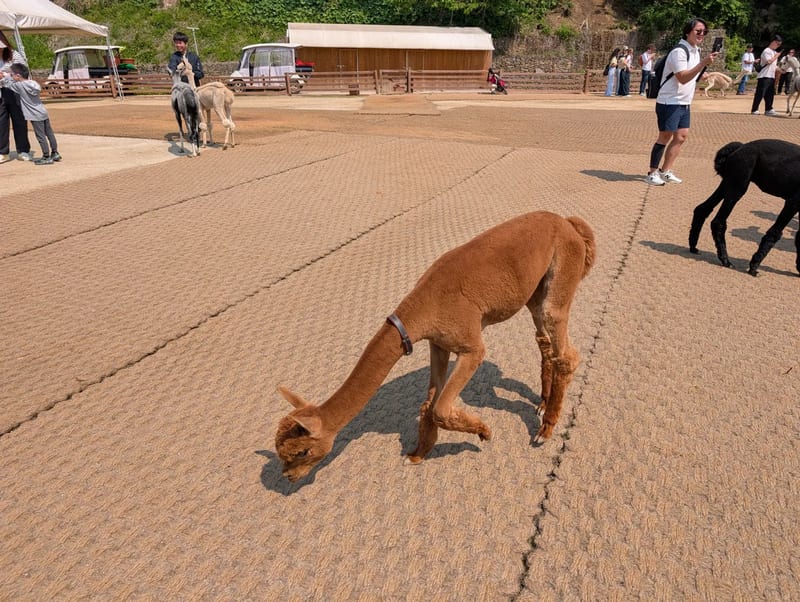
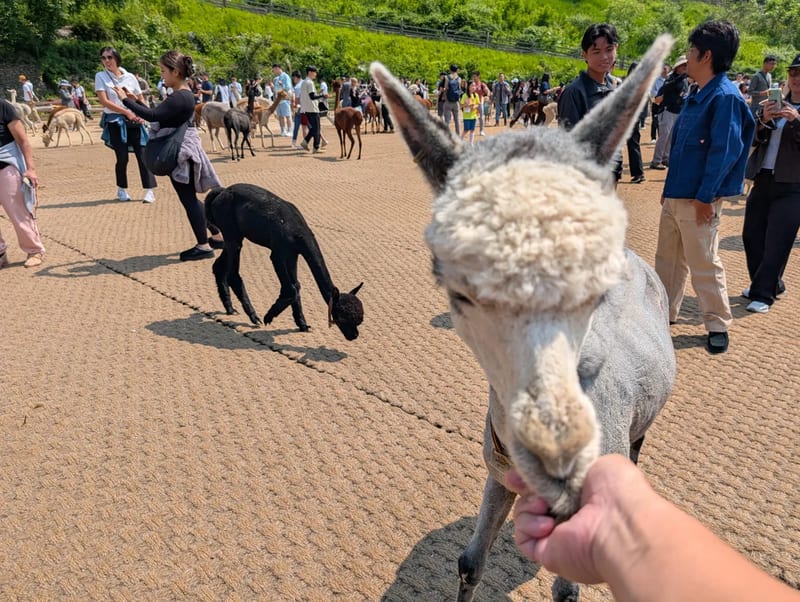
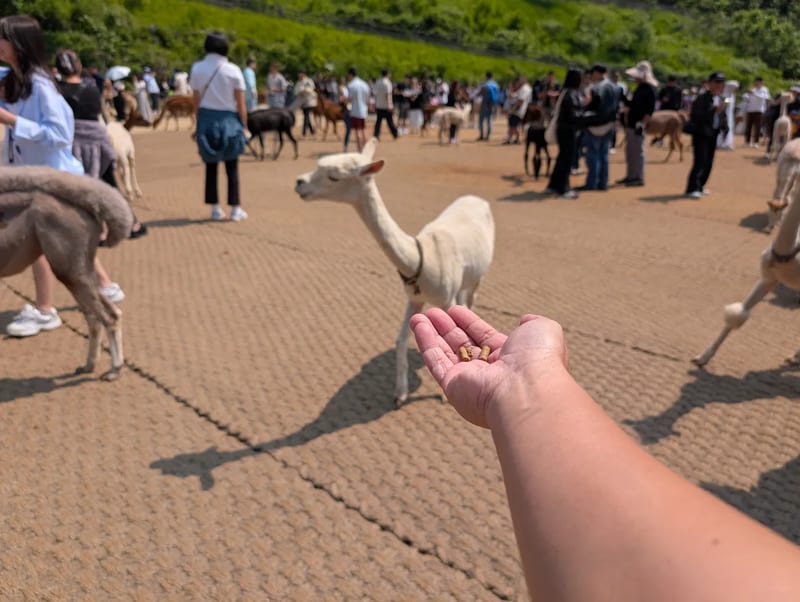
We were told not to touch an alpaca’s head, because it might spit. The yellow Korean sign had the other rule: don’t hand over the whole cup. Put some food in your hand and give it a little at a time.
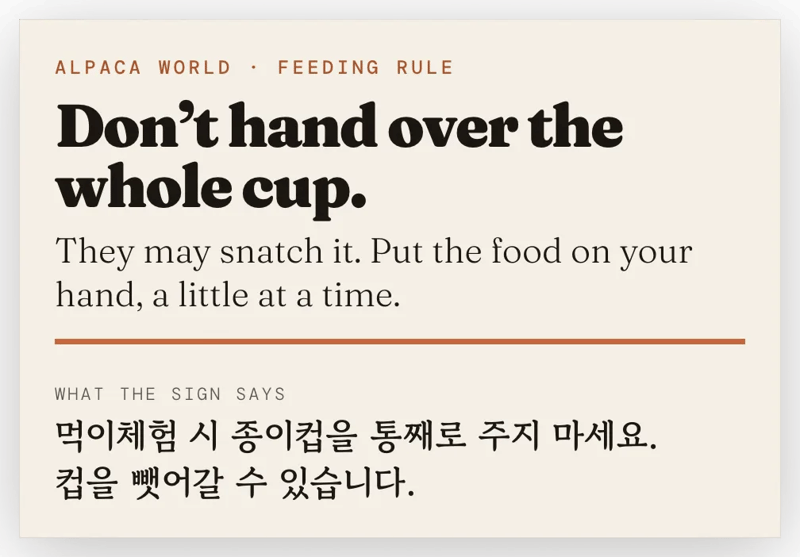
I also heard staff telling a visitor to offer only two pellets at a time.
More Than Alpacas
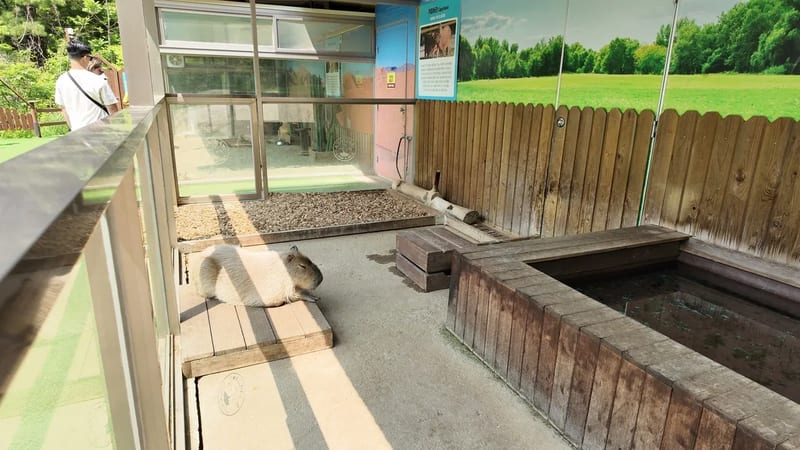
Farther along there was a capybara resting on a platform. Wikipedia calls it the largest living rodent. There was also a chipmunk and a small fox, and I never found out what kind of fox.
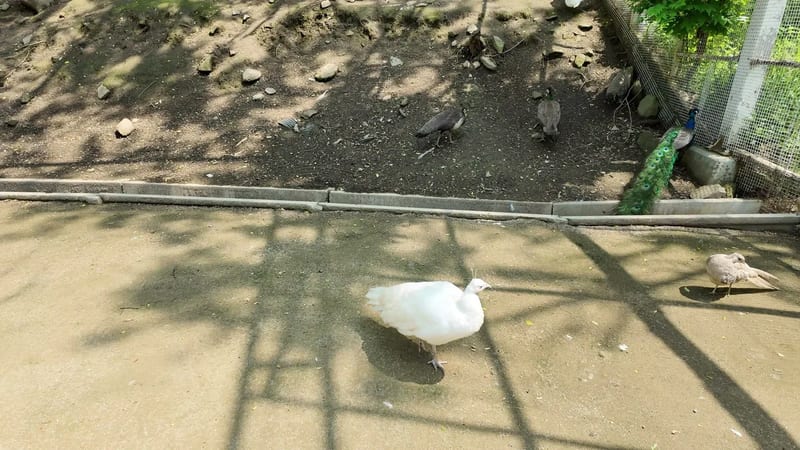
At Peacock World a sign warned that the birds might peck, and another explained that the male displays his wings to attract a female. One peafowl was entirely white, with a blue peacock behind it. That is leucism, not albinism: the feathers lose their color but the eyes stay normal.
White Deer and the Farthest Stop
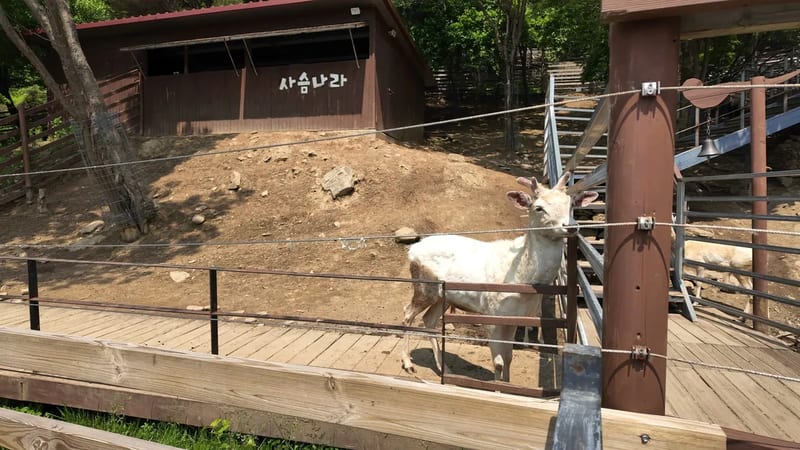
Deer Land had fallow deer, including white ones by the rope fence. I wondered whether they were albino. They are not. White is a normal color variety of fallow deer.
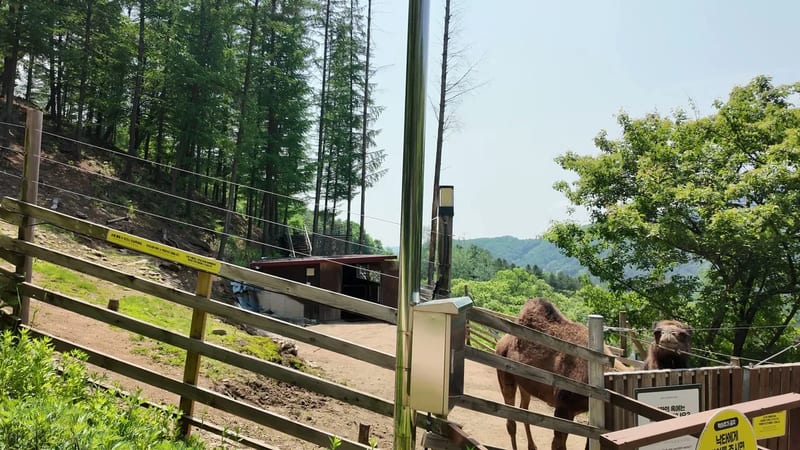
The Bactrian camels were in the farthest, northernmost part of the park, and nobody else was there. The yellow sign at their gate showed a finger going into a camel’s mouth, which is a bad idea. Their humps hold fat, not water.
The Last Stamp and the Loop Back
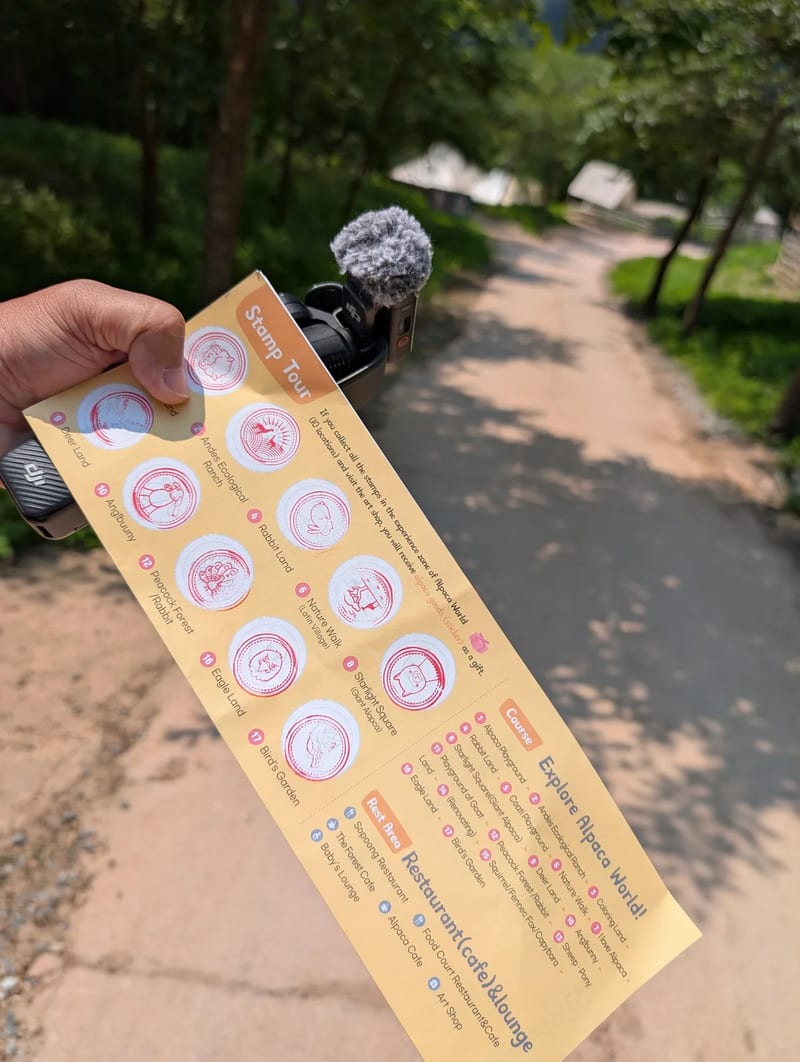
Starlight Square has a big alpaca statue and the last stamp for the card.
Rabbit Land came next, with rabbits in different colors and a warning to be careful when feeding them. A sign there says the staple food of rabbits is hay, not carrots.
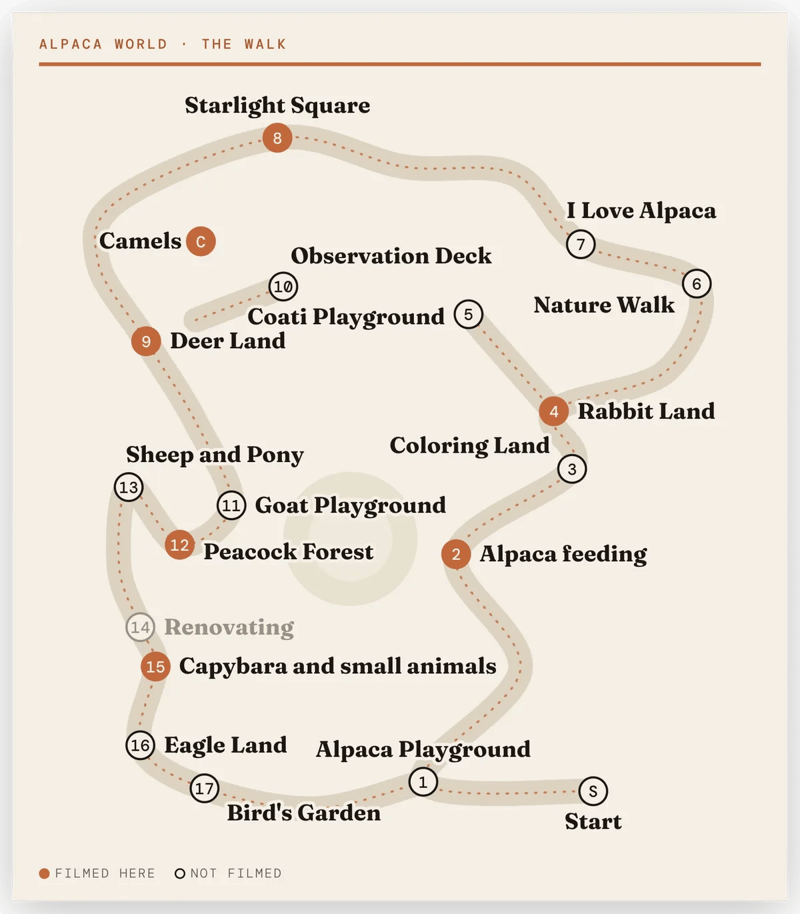
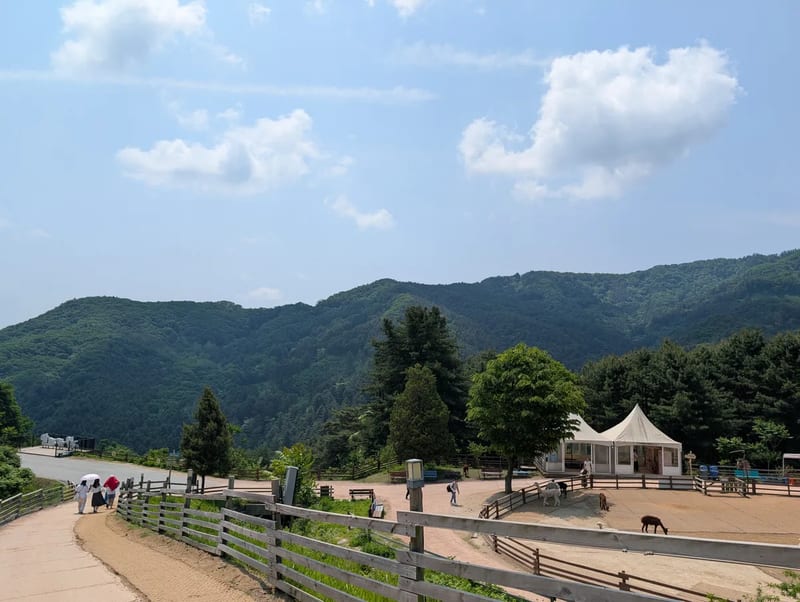
I did the loop alone. From the high path I could look down and see the feeding area where I started, with the valley beyond it.
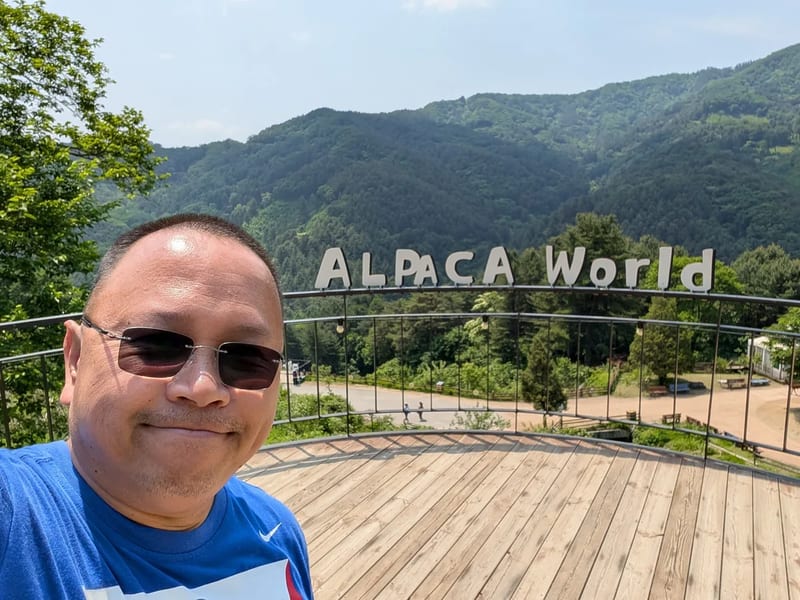
Finishing all the stamps earns a sticker pack. I also bought a pack and a coin, and I don’t know what is inside them. Then I got some alpaca bread and an iced mocha.
A Few Takeaways
- Expect a steep walk from the parking lot to the ticket booth, and more uphill after that.
- Feed the alpacas a little at a time, and leave their heads alone.
- Admission was 18,000 won on the board that day (May 2025). Check the price before you go.
- Finish the stamp card if you want the sticker pack.
This was the day after the Costco run in Seoul. The whole trip in order starts at our first day in Seoul.
This post is based on our travel vlog. Watch the full video above for the feeding yard, the white deer, and the loop in real time.
Photo Gallery
Watch the Full Video
Video Chapters
Get Travel Updates
New stories and tips, straight to your inbox.
Sherwin Martin
Family man, traveler, and content creator. I explore the world with my wife Abby and our boys. We capture road trips, theme parks, and international adventures along the way.
Follow on YouTube
Join the conversation
Comments come straight to me rather than posting publicly, and I read every one. Your email is never published.