
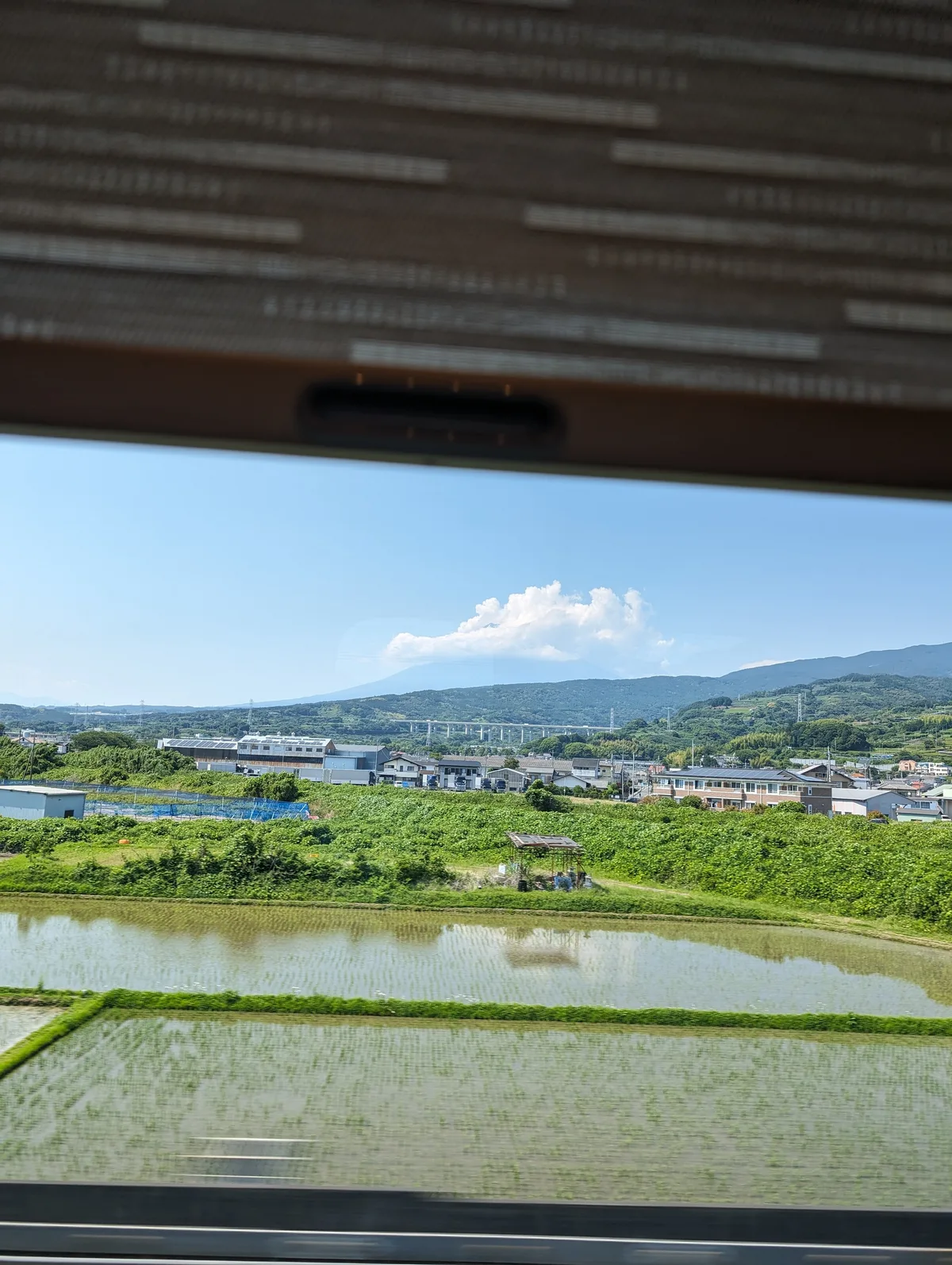
Day four of Japan 2024. If you missed the first three — arriving in Osaka, Dotonbori at dusk, and Kura revolving sushi, Osaka Castle, the Umeda Sky Building, and the Cup Noodles Museum, and Nara deer and Kyoto in one day — go back and start there.
Today we’re checking out of the hotel in Osaka, Japan, and heading to Tokyo by Shinkansen. Six people, all the luggage, and it was already pushing 90°F outside by the time we got moving.
Getting Out of Osaka
Before the bullet train, we had to cross Osaka by subway to reach Shin-Osaka Station, which is where the Shinkansen departs from. Our hotel was in the Namba/Shinsaibashi area — a few stops south.
The Osaka Metro is clean, air-conditioned (non-negotiable when it’s 90 degrees), and well-organized. Station platforms have color-coded floor arrows: red means board the train, blue means step aside so passengers can exit. Every station has a letter-number code — you don’t need to know Japanese station names, just the code. Announcements are in Japanese and English.
One thing not clearly marked anywhere: transferring from the Osaka Metro to the Shinkansen requires a separate ticket. You can’t use the metro fare toward the bullet train. At Shin-Osaka, head to the Shinkansen ticket counter or machines and purchase a new ticket before you go through the Shinkansen gate.
Shin-Osaka Station
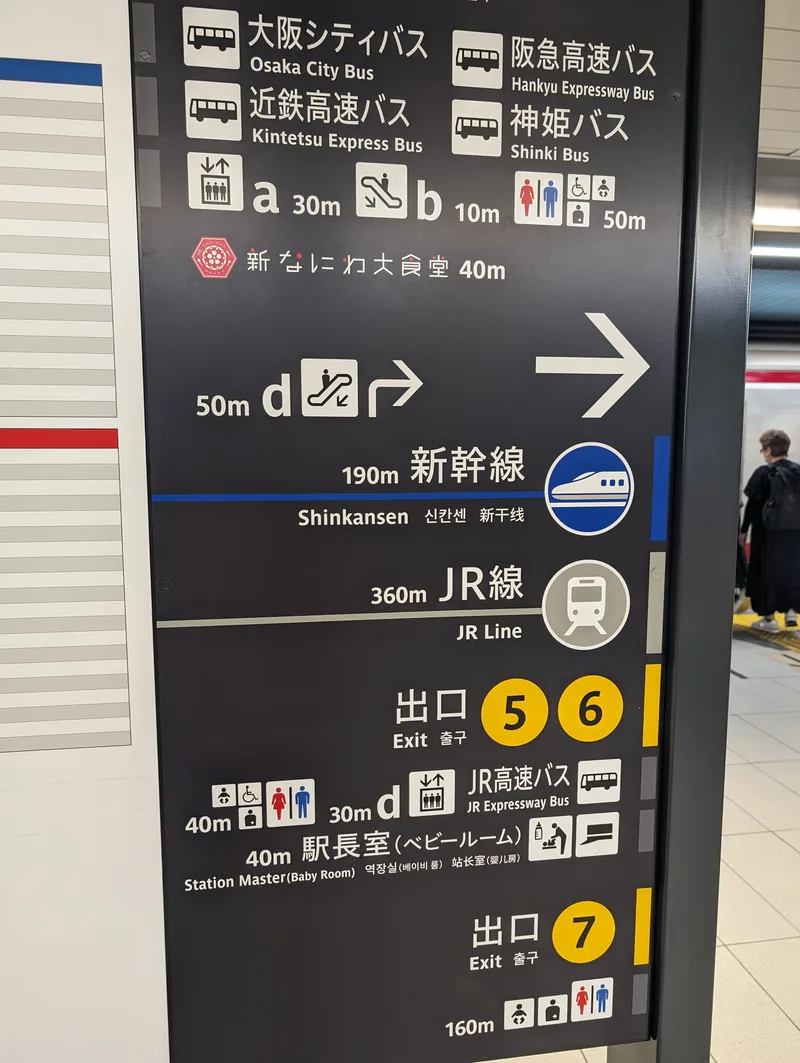
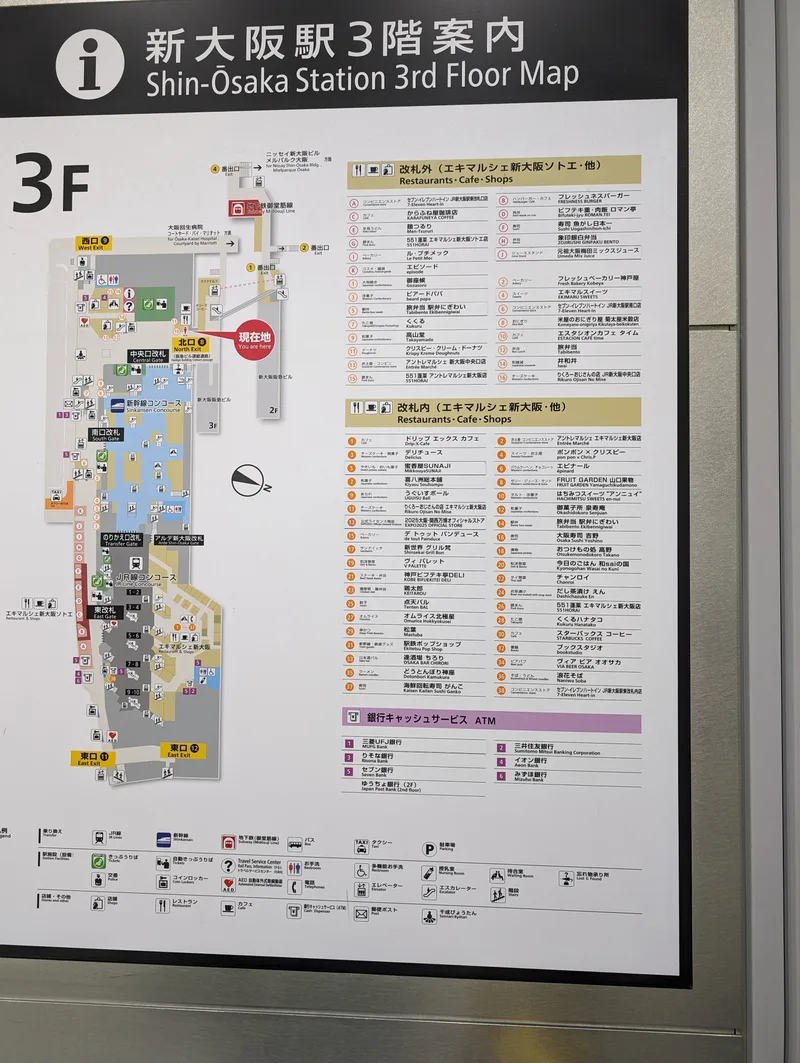
Shin-Osaka is a multi-level station. The Shinkansen concourse is on the upper floors, and they have a floor map that includes the food shops — which is worth consulting if you have 20 minutes before boarding, because you want to grab an ekiben.
We paid ¥19,500 per person (roughly $124) for reserved seats on the Tokaido Shinkansen to Tokyo. That’s for the Hikari — the standard express. The Nozomi is faster by about 20 minutes but costs more and isn’t covered by the JR Pass. For most people the Hikari is the right call.
On the Platform
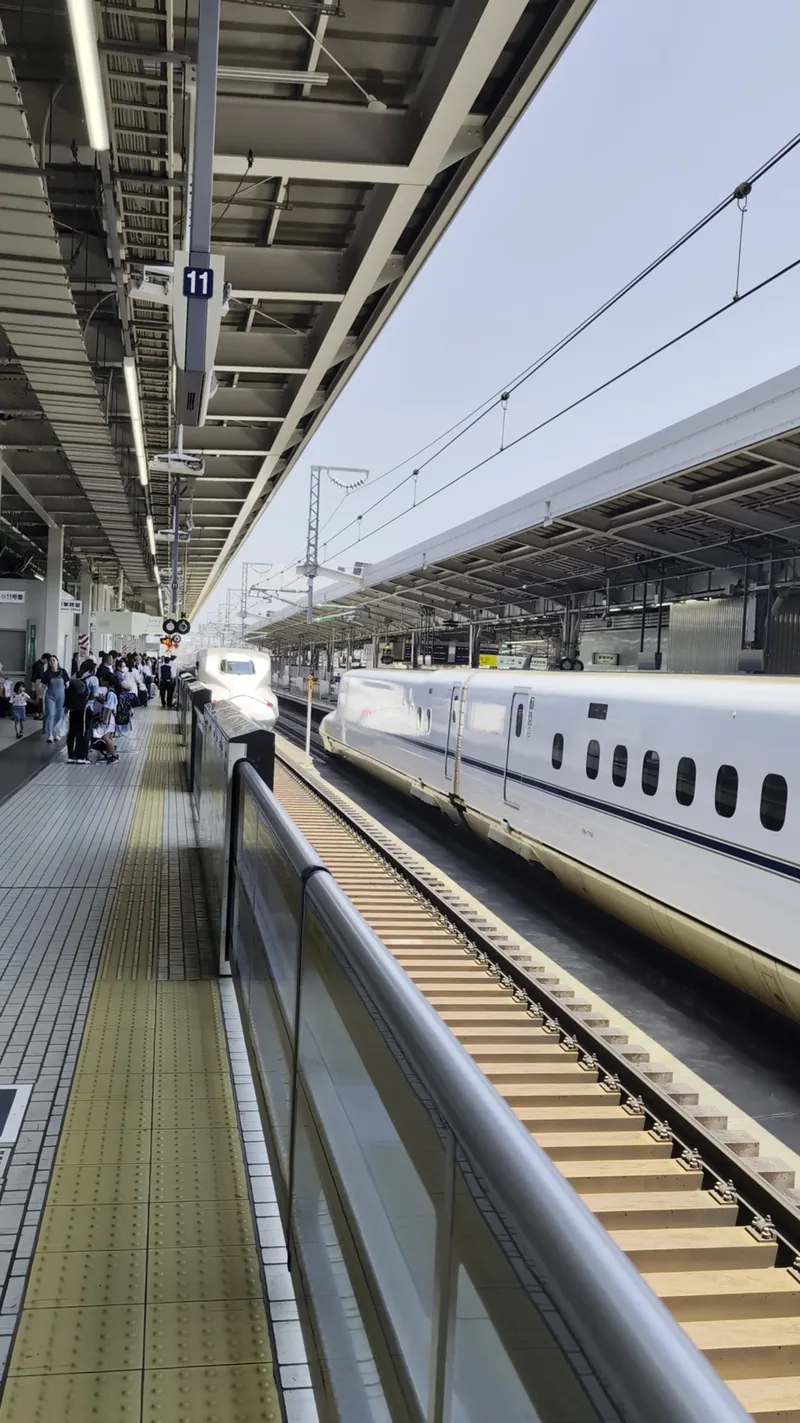
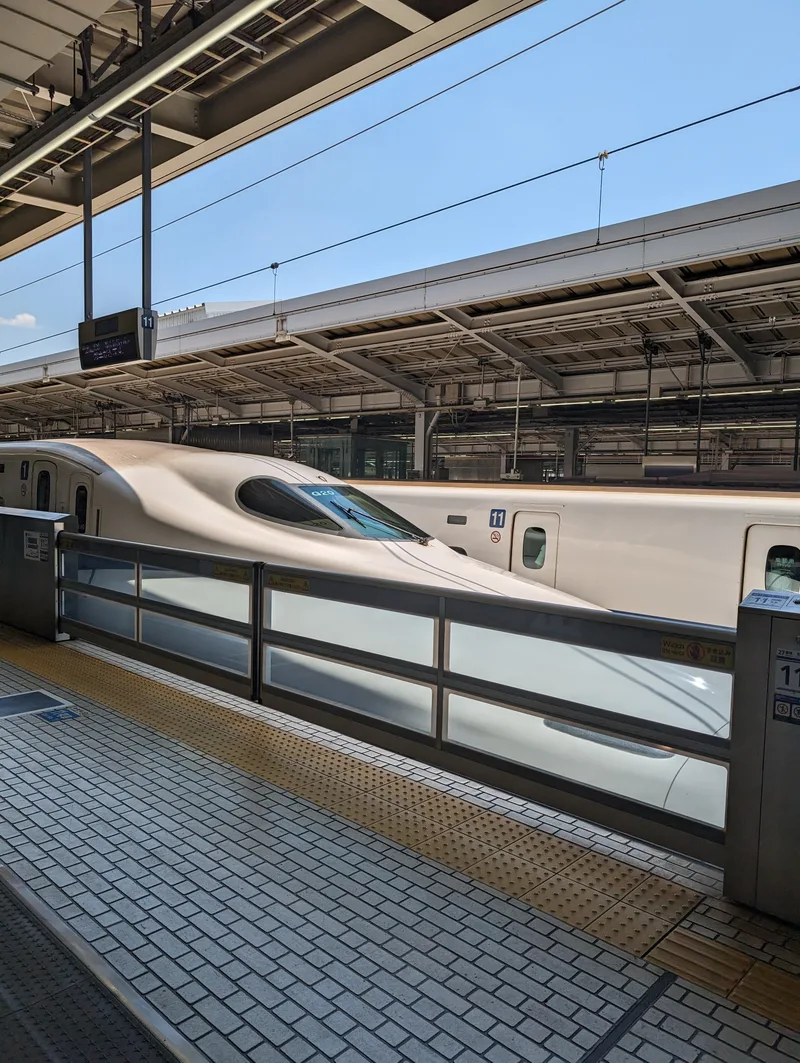
A sign on the platform noted that during busy times, Shin-Osaka sees up to 13 Shinkansen trains per hour. Then one pulled in and the sound made that number make sense — a rush of air ahead of it, and then the train materializes and stops precisely at the marked door positions. It is a different category of infrastructure than anything we have back home.
On the Train
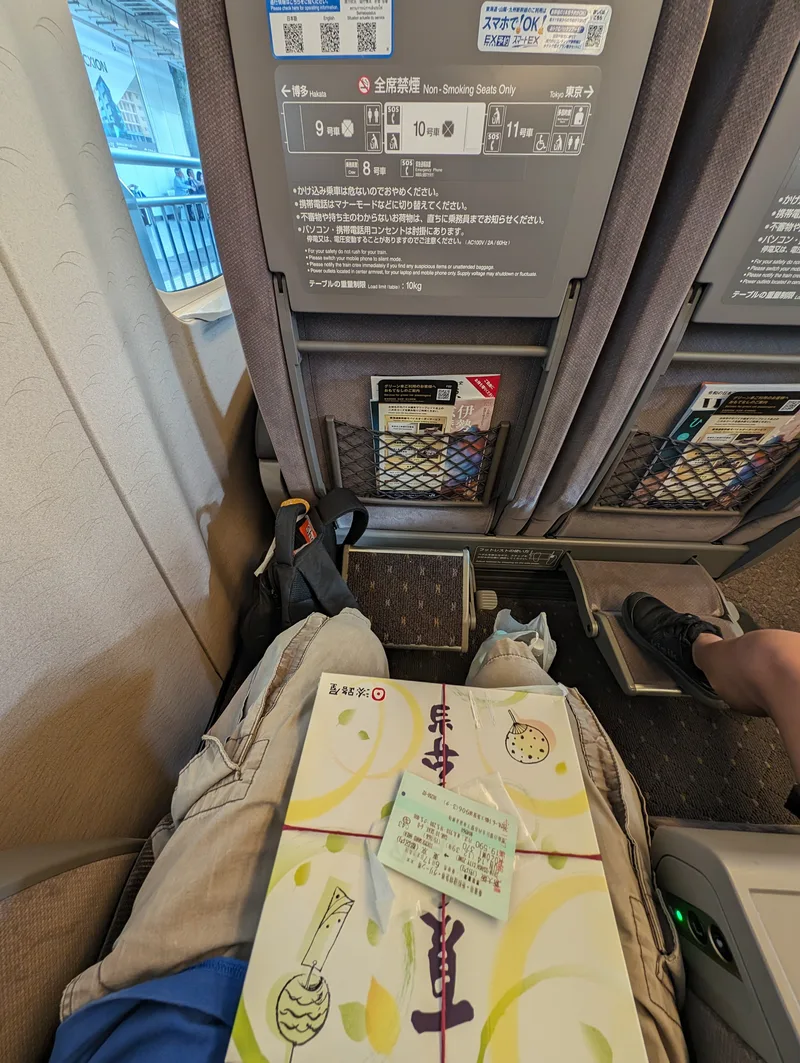
The seats have decent legroom — more than a US domestic flight — with a tray table and a small seatback pocket. The recline mechanism is clever: the whole seatback slides back on a track so you don’t bump the person behind you.
Before the train even moved, I had an ekiben from a platform vendor. Ekiben are train-specific bento boxes that vary by region — the Shin-Osaka ones are excellent. Mine had rice, grilled eel, and a spread of small dishes across nine compartments. I also had a Kirin, because it’s there and it’s a two-and-a-half-hour ride.
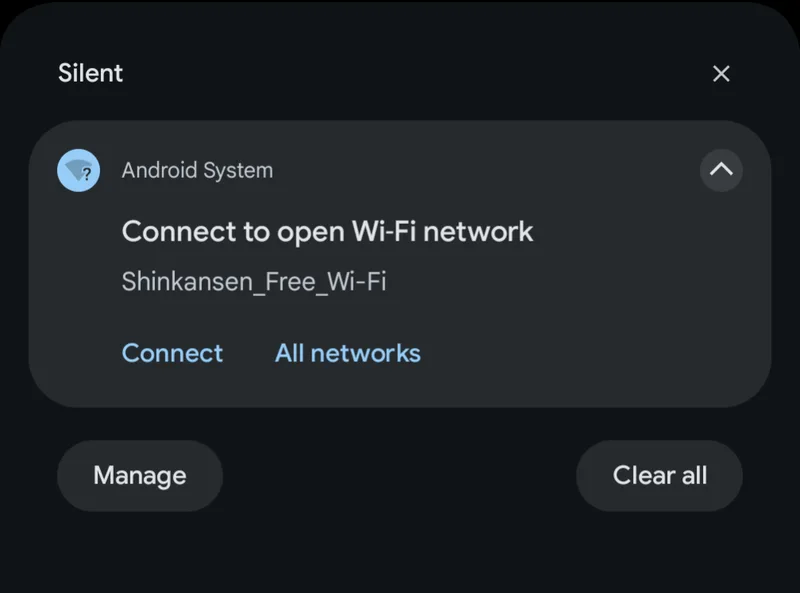
The WiFi: Shinkansen has free WiFi. The catch is it runs through the cellular networks along the route, so speed varies dramatically. Near cities I was getting 110 Mbps down. Between cities it dropped under 2 Mbps. Fine for messaging, not reliable for uploading.
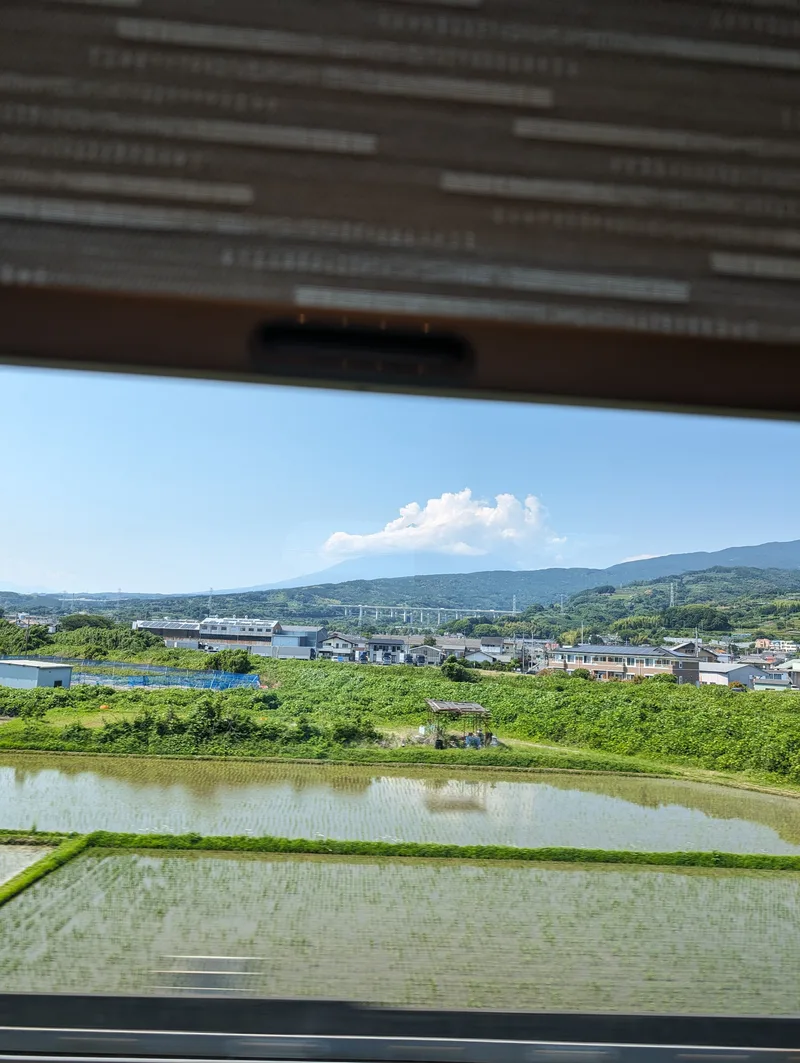
The Tokaido Shinkansen covers 320 miles from Shin-Osaka to Tokyo in about two and a half hours. Out the window for the middle of the route: rice paddies, scattered farmhouses, mountain ranges in the distance. At 170mph, the countryside moves past the window in a way you have to see to appreciate.
Arriving in Tokyo
We pulled into Tokyo Station right on schedule. From there it was the Yamanote Line — the JR loop that circles central Tokyo, Japan — to Shibuya, where the hotel was.
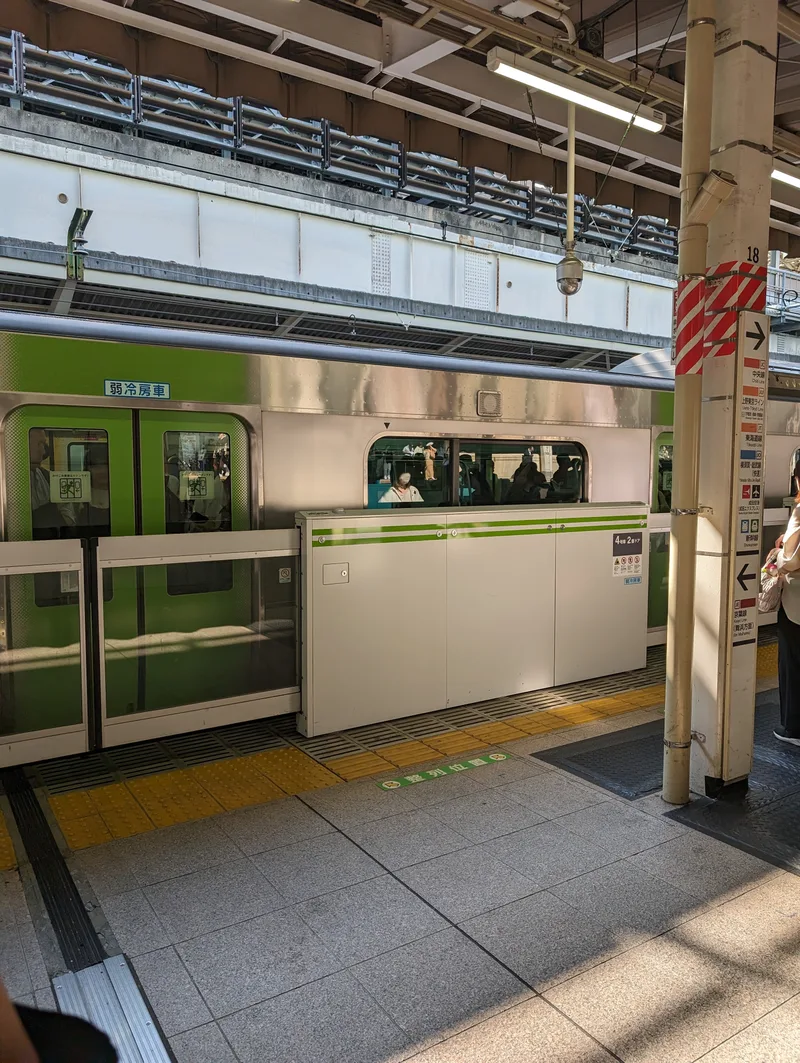
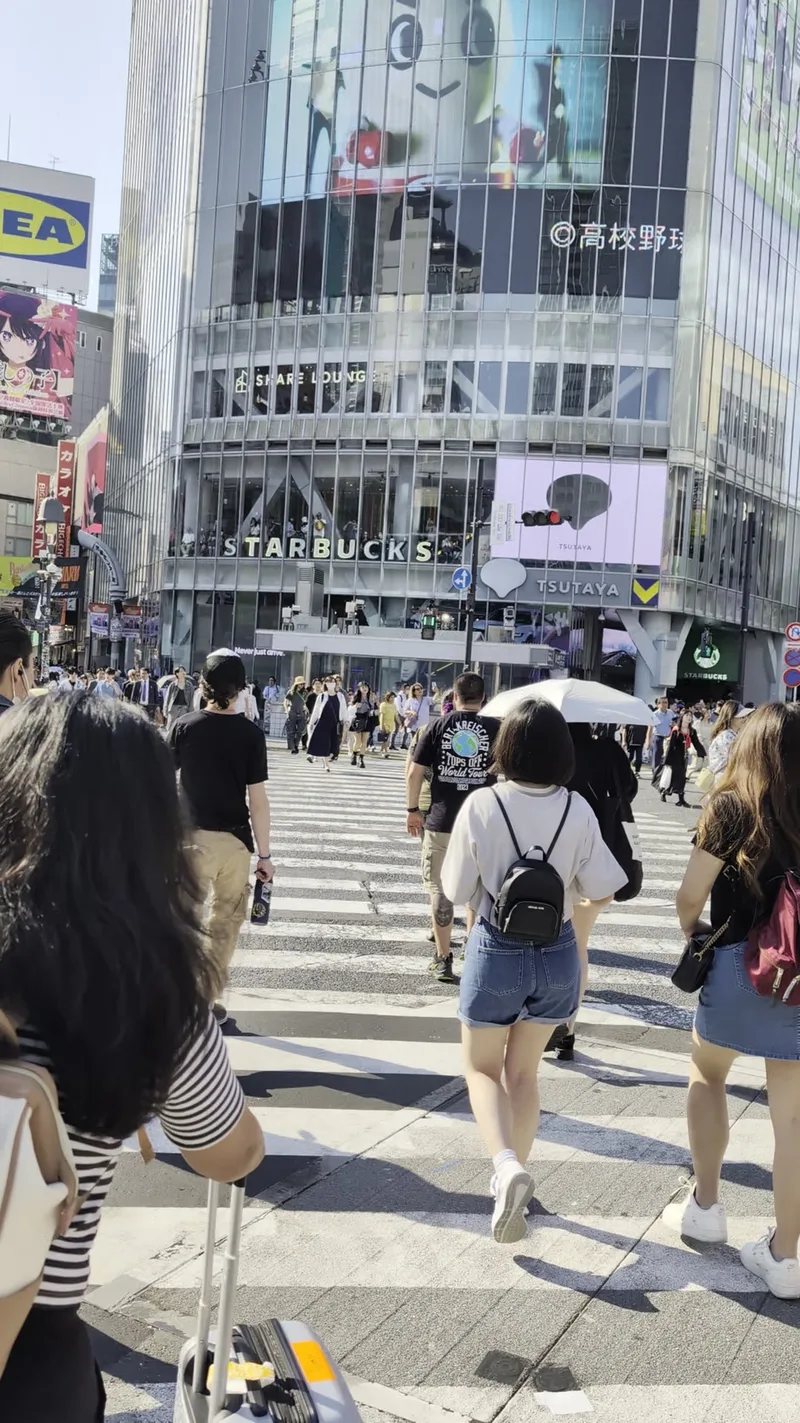
The hotel is about a half-mile from Shibuya Station. At 93°F that’s a workout dragging luggage. We crossed the Shibuya Crossing on the walk over — didn’t stop, but we’re going back later.
Creston Hotel Shibuya
Six people, three rooms. Tokyo hotels are strict about a two-person maximum per room, no exceptions. The rooms at Creston Hotel Shibuya are compact but efficiently laid out — everything is within reach and nothing is wasted.
Highlights:
- Deep soaking tub in the bathroom. Japanese standard. American hotels take note.
- Toto Washlet bidet. At this point in the trip, I’m planning to add one to every bathroom at home.
- Complimentary pajamas in each room — actual lounge set, not a paper slipper situation.
- Mini fridge, complimentary streaming, a closet latch that doubles as a secondary door lock.
- Ice machine is on the 2nd floor only. We’re on the 3rd. Worth knowing.
Everything is complimentary without a per-item charge. That’s the default in Japan and it consistently makes hotels feel better than they otherwise would.
One practical note on charging: Japan hotel rooms typically have one or two outlets near the bed. After a day of shooting, you’ve got phones, cameras, and a laptop all dead at the same time. The Anker 727 Charging Station turns one outlet into four AC outlets plus USB-A and USB-C. It worked in every hotel on this trip — Japan runs on 100V and the 727 is rated for 100-120V, so it’s fully compatible. Just leave it home if you’re heading to Europe or Australia (it doesn’t handle 240V).
Parco, Bape, and the Price Check
After dropping luggage and changing, we walked to Parco — a multi-story shopping complex a few blocks from the hotel in Shibuya, Tokyo, Japan.
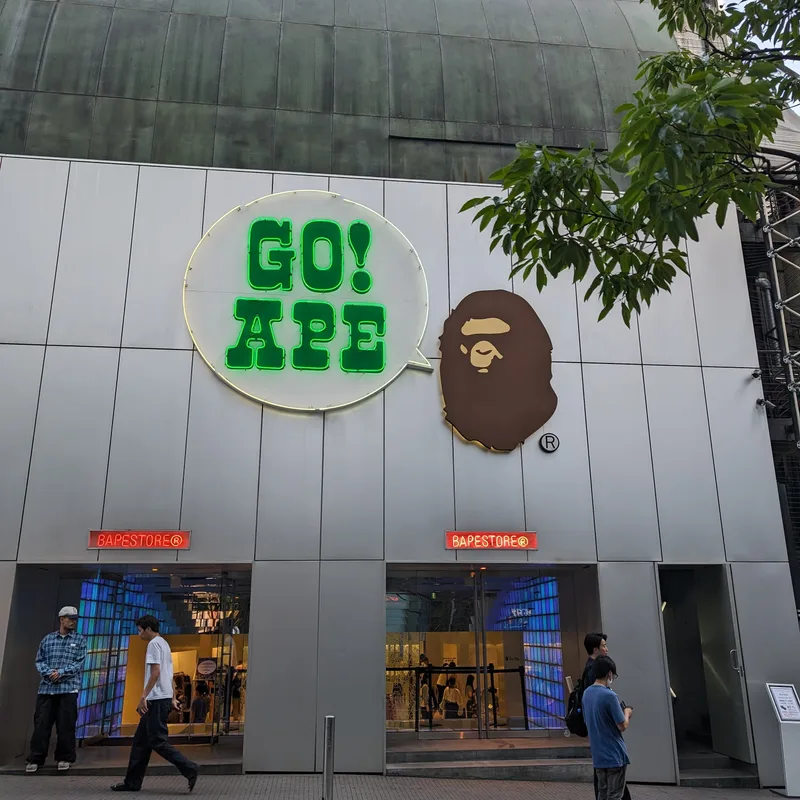
There’s a Bape store inside. I went in. The t-shirts start at $62 and go to $120.
I drive a Tesla and I still can’t convince myself that $120 for a t-shirt with an ape on it makes sense. I left without buying anything. Maybe I’m too old. Maybe I’m too practical. Moving on.
GU Store
Nearby is GU — same parent company as Uniqlo, aimed even lower on price, with Japan-only styles you won’t find at US locations. Bigger GU stores carry a solid selection and the quality is fine for basics.
We spent $175 in there. One of my kids walked out with back-to-school clothes. I got a few shirts I actually needed. Spend over ¥5,500 and you qualify for tax-free pricing, which takes a bit more off at the register.
If you’re doing any real spending in Japan, use a travel card with no foreign transaction fees — the 3% fee adds up fast when you’re converting yen on every purchase. The Chase Sapphire Preferred® / Reserve® is what I use — no foreign transaction fees, points on every travel and dining purchase, and the welcome bonus (75,000 points on Preferred, 125,000 on Reserve) is worth real money toward the next trip.
Dinner at Yoshinoya
We ended the day at Yoshinoya — a Japanese beef bowl chain operating since 1899. There are a handful of US locations but the Japan version is a different experience. Beef bowls, grilled pork, unagi over rice, miso soup. Everything on a tray and everything good.
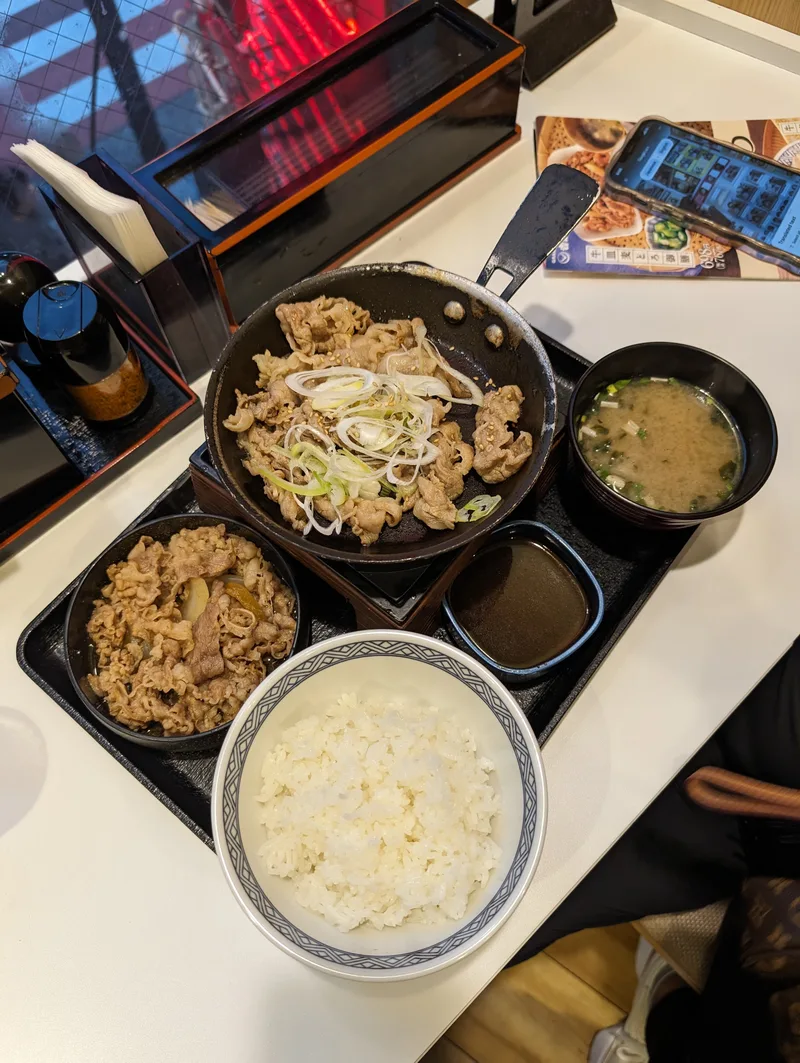
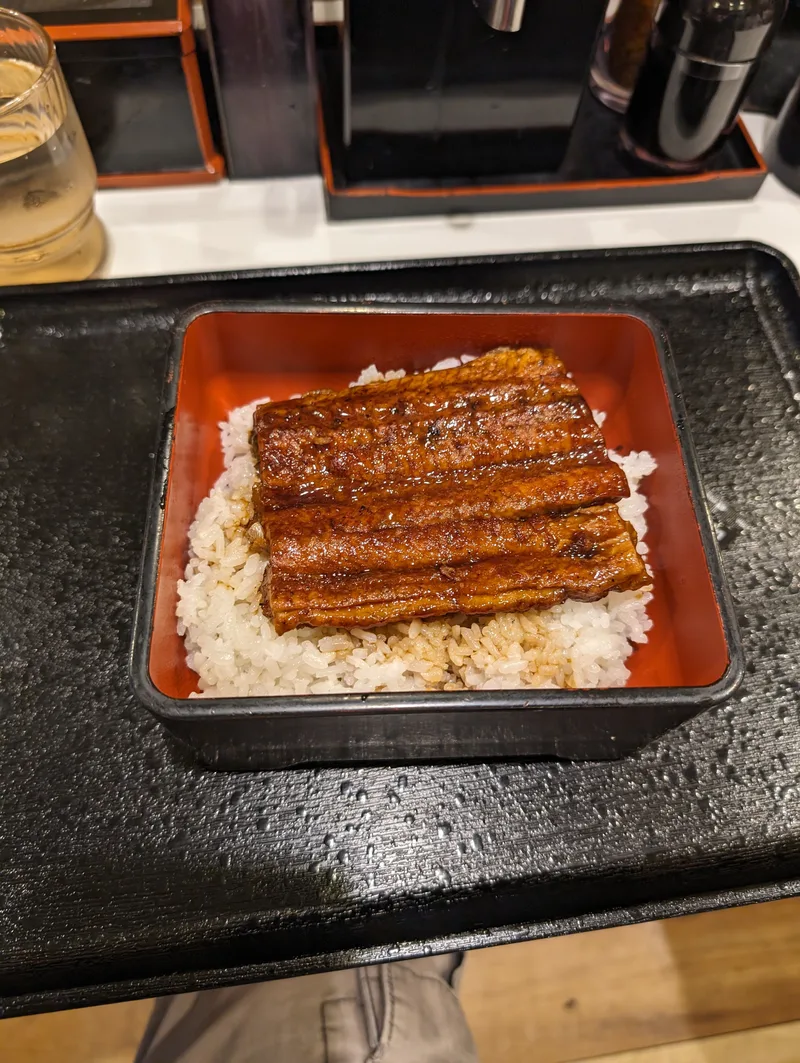
No soda. Only beer. I drank beer.
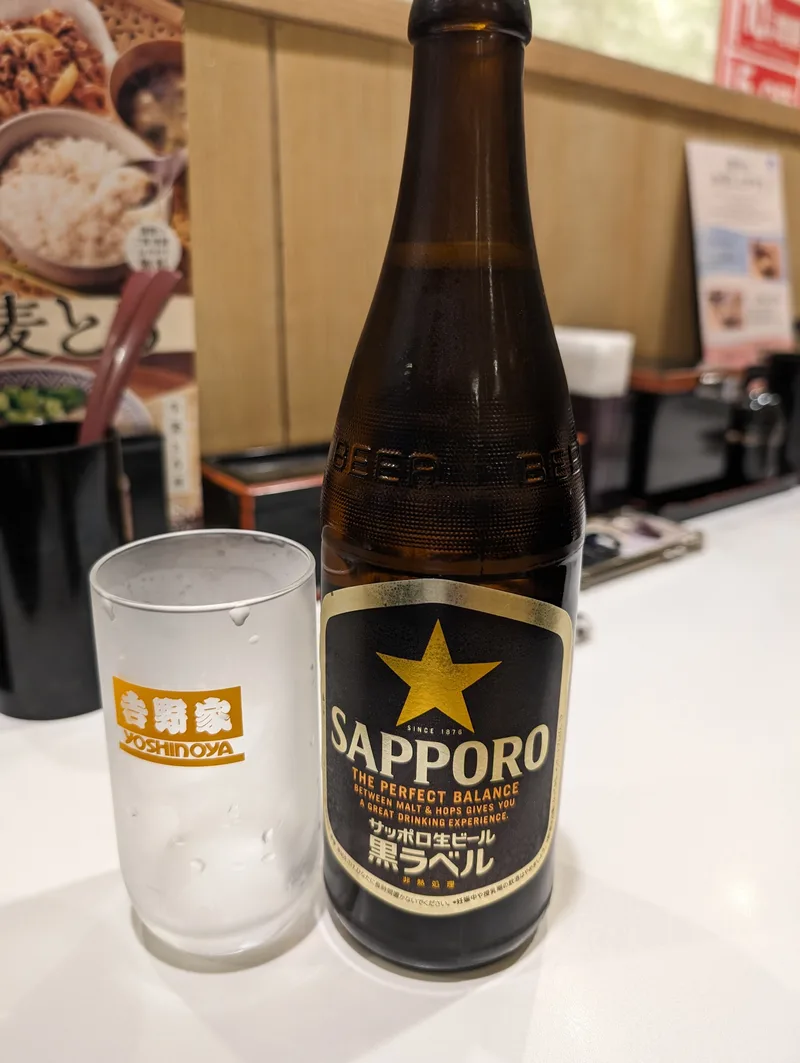
My knee had been bothering me since the Nara walk the day before. Not sure if it was the mileage, the heat, or four days of accumulated damage, but sitting down with dinner and a cold beer helped.
And Then Uniqlo
After dinner we went to the Uniqlo in Shibuya. Same brand as the US locations, but the Japan stores are larger, better stocked, and carry local designs you can’t get anywhere else. Prices are a few dollars cheaper than US outlets.
I bought more shirts. I have no regrets.
Cars of Shibuya, Tokyo
I couldn’t help noticing what was parked on the street.
Japan does the family minivan in a way America has never figured out. The gold Alphard looks like something you’d want to be seen in. The Toyota Sienta taxi is compact and practical in a way the Crown Victoria never was.
What’s Next
The knee is not okay. Tomorrow is another full Tokyo day. Hoping overnight recovery works.
The Shinkansen is genuinely everything people say it is. Speed, cleanliness, reliability — and you can eat a full bento and drink a Kirin in a reserved seat while rice paddies fly past outside. Not comparable to US domestic travel in any meaningful way.
Tokyo proper starts tomorrow — with a day trip to Mount Fuji, Chureito Pagoda, a 1,300-year-old shrine, and a JDM car lead.
Some links in this post are affiliate or referral links. If you use them, we may earn a small commission at no extra cost to you — it helps keep this site running. See our disclosure for details.
Watch the Full Video
Video Chapters
Get Travel Updates
New stories and tips, straight to your inbox.
Sherwin Martin
Family man, traveler, and content creator. I explore the world with my wife Abby and our boys — capturing road trips, theme parks, and international adventures along the way.
Follow on YouTube